
Catastrophic Rocket Explosion Marks Major Setback for Commercial Space Industry
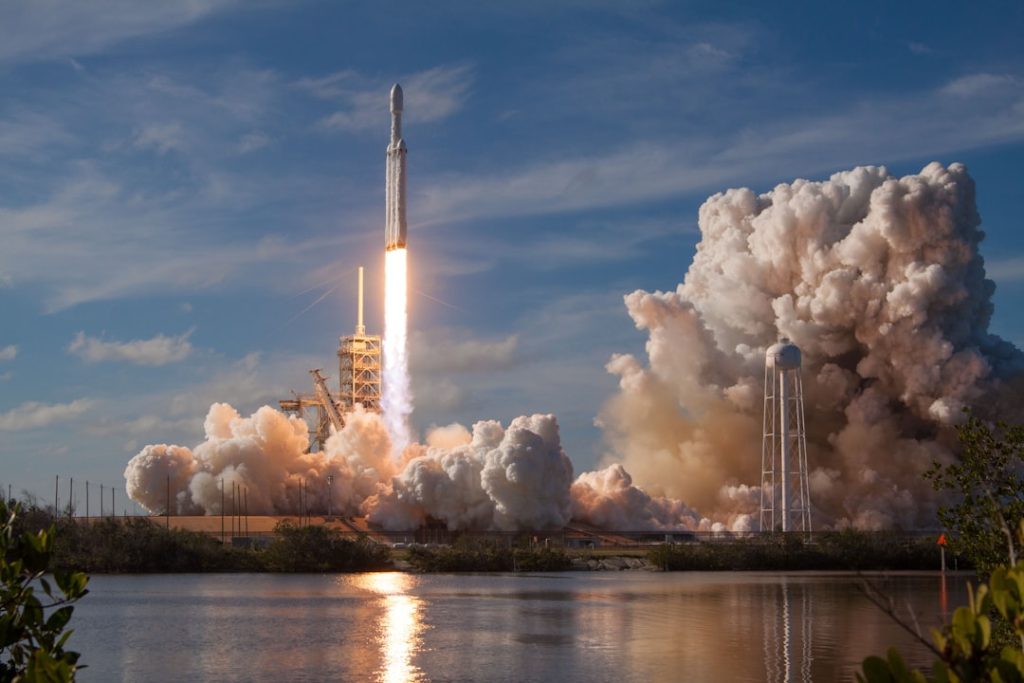
The commercial space industry witnessed one of its most devastating failures this week when a major rocket company’s heavy-lift vehicle exploded during a routine static fire test at a Florida launch facility. The incident represents a significant blow to the rapidly expanding private space sector and raises serious questions about the pace of development in this high-stakes industry.
What makes this failure particularly striking is the timing and context. This wasn’t a startup company taking its first tentative steps into space—this was an established player that had already demonstrated considerable success with three previous launches. The rocket in question had proven its capability to land and be reused, marking it as a genuine competitor in the increasingly crowded launch market.
The Human Cost of Rapid Development
While thankfully no injuries occurred, I believe this incident highlights a troubling trend in the commercial space industry: the relentless pressure to accelerate development timelines. Companies are pushing boundaries not just in technology, but in testing protocols and safety margins. This explosion should serve as a sobering reminder that space technology remains inherently dangerous, regardless of how routine these operations might appear.
The failure occurred during what should have been a straightforward static fire test—essentially a dress rehearsal where engines are fired while the rocket remains firmly planted on the ground. That such a catastrophic failure could happen during this relatively controlled phase suggests deeper systemic issues that extend beyond simple mechanical failure.

Implications for Lunar Exploration Programs
The broader implications of this setback extend far beyond one company’s bottom line. NASA’s ambitious lunar exploration timeline, which already faces numerous technical and political challenges, now confronts another significant obstacle. The space agency had been counting on this rocket system to deliver critical cargo and eventually crew to the Moon’s surface.
In my view, NASA’s strategy of relying heavily on commercial partners, while innovative and cost-effective in theory, creates dangerous single points of failure. When a key contractor experiences a catastrophic setback like this, entire mission timelines can collapse. This is precisely the scenario that traditional aerospace advocates warned about when NASA began shifting toward commercial partnerships.
Who Benefits and Who Suffers
The immediate beneficiaries of this disaster are competing launch providers, who suddenly find themselves with reduced competition for lucrative contracts. However, the broader space industry suffers when high-profile failures like this occur, as they inevitably lead to increased scrutiny from regulators and more conservative approaches from potential customers.
Small satellite operators and research institutions that depend on reliable, frequent launch opportunities are particularly vulnerable to these kinds of disruptions. Unlike large government agencies or well-funded corporations, they often lack the flexibility to wait months or years for alternative launch options.

Financial Resilience vs. Industry Vulnerability
What’s particularly noteworthy about this situation is the company’s financial position. With backing from one of the world’s wealthiest individuals, this setback, while painful, won’t prove fatal. The company can absorb the costs of rebuilding infrastructure and redesigning systems—a luxury that many aerospace startups simply don’t have.
This raises important questions about the sustainability of the current commercial space model. Success increasingly depends not just on technical excellence, but on having sufficiently deep pockets to survive inevitable failures. This creates a concerning dynamic where only the wealthiest players can afford to take the risks necessary for innovation.
Infrastructure Damage and Recovery Timeline
The extensive damage to launch infrastructure represents perhaps the most serious long-term consequence of this failure. Building and certifying launch facilities is an enormously complex and time-consuming process. Even with unlimited financial resources, the company likely faces at least 18 months before returning to flight operations.
This timeline assumes everything goes perfectly during reconstruction—an optimistic scenario given the complexity of modern launch systems. More realistically, we’re probably looking at a two-year gap in operations, which could prove devastating for maintaining customer relationships and meeting contractual obligations.
The silver lining, if there is one, lies in the fact that the explosion occurred during testing rather than during an actual mission with valuable payload aboard. This timing, while still catastrophic for the company, prevents the additional complications and liability issues that would arise from destroying customer satellites or scientific instruments.
Ultimately, this incident serves as a stark reminder that despite the rapid commercialization of space, rocket science remains rocket science. The industry’s push toward routine, airline-like operations, while admirable in its ambition, must be balanced against the fundamental reality that we’re still dealing with controlled explosions containing enormous amounts of energy. When those explosions become uncontrolled, the consequences are swift and devastating.